
The Dark Side of Social Media Engagement
And How You Can Use It
Let’s clear something up right away: dark engagement is not sinister, shady, or a sign your brand is about to be canceled. No cloaks. No secret societies. No anonymous burner accounts plotting your downfall. In fact, it’s often the opposite. Dark engagement is what happens when people care enough about your content to share it… just not where you can see it.
If public likes, comments, and shares are the tip of the iceberg, dark engagement is everything happening below the surface: DMs, screenshots, group chats, private Slack threads, WhatsApp messages, text chains that start with “don’t post this but…” and end with genuine conversation.
What Is Dark Engagement, Really?
It refers to private sharing behaviors—content passed along outside public feeds and measurable social metrics. Research from platforms like WhatsApp, Instagram, and Signal shows that private sharing now outweighs public sharing for many types of content, especially anything emotional, controversial, insightful, or identity-driven.
Imagine This:
You post a bold brand take. Public engagement? Mild. A few likes. One polite comment.
But behind the scenes? Someone screenshots it and sends it to a friend saying, “This is exactly what I’ve been thinking.” Another drops it into a group chat. A third forwards it to their boss.
Your post didn’t flop. It landed…just quietly.
Why It Happens (and Why It Matters)
People share privately when content feels:
Too personal to “like” publicly
Politically or culturally charged
Intellectually sharp (critiques systems you may be a part of)
Emotionally validating
Identity-revealing
Ironically, the more meaningful the content, the more likely it is to go dark.
This is especially relevant for brands with strong POVs, nuanced messaging, or culturally specific narratives. Public engagement rewards safety. Dark engagement rewards resonance.
What Brands Should Do About It
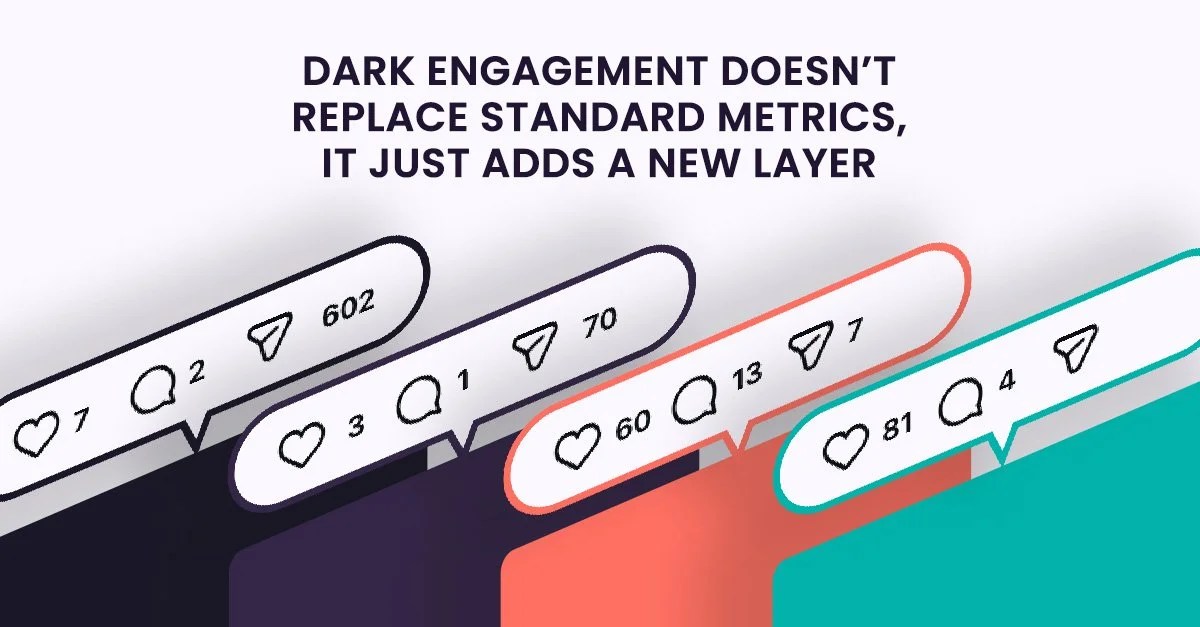
Let’s be clear: standard metrics still matter. Reach, CTR, conversions, and traffic remain essential. And dark engagement doesn’t replace them, it just adds a new layer.
Smart brands look for indirect signals:
Spikes in site traffic without proportional social likes
Increases in branded search after content drops
Longer dwell time on pages tied to “quiet” posts
Anecdotal feedback (“I saw this shared in a group chat”)
To encourage dark engagement, create content that:
Sparks opinion rather than consensus
Says what your audience is thinking but not posting
Feels worth saving, screenshotting, or sending
The Takeaway For Brands
Dark engagement isn’t invisible, it’s just private. And in a world where trust is fragile and feeds are crowded, private sharing is often the highest compliment your content can receive.
If people are talking about you when you’re not in the room, you’re doing something right.
Check out how we tap into deep cultural insights to connect brands with new audiences here.